Sunday, July 14, 2013

Blog Post Assignment #14


Create Your Own Blog Post!

For blog post #14 Dr. Strange is going to let us make our own blog post. I think that's an amazing idea. It'll really spark our creativity and give him ideas as well. I mean that's what our whole class has been about anyway; learning together. Our instructions were to make it something as if he would have and give instructions for it just as he does. So this should be interesting and fun! Here goes.....

Instructions:
  • Create a Google presentation slide
  • Include your likes, dislikes, and why you want to be an Elementary teacher. ( For those who want to become elementary teachers...if not make it according to what you would like to become.) I want to learn about YOU personally!
  • Include visual effects BE CREATIVE! 
  • Also include pictures and embed in your blog
  • HAVE FUN! 


Final Report on PLN Project #9


Personal Learning Network (PLN)

Since my last report I have added another great learning source to my list of helpful things. It's called Symbaloo. I can add all of my other websites to this little tool. Symbaloo is a new way to organize my most used websites. With Symbaloo you never have to type in long web addresses again. Here is a great video to show you how to use it. Symbaloo has each of your favorite web sites that you have added organized into tiles. This is a very helpful technology tool. Especially to a teacher because you can quickly pull up a site for a part of a lesson during class. Let me share with you a few of my favorite sites I have recently added.

First up, is of course my gmail. I use this daily. It is where I can check messages, stay organized, and even create documents on my drive. I can collaborate with others using the Google plus feature as well. I also added my blogger for whenever I felt the need to post on a new experience or share with others helpful resources I have found. Along with that I added the class blog for easy access to new information Dr. Strange has posted.

I have stumbled across another great website from a fellow classmate that I also added to my Symbaloo. It is called Internet 4 Classrooms. Internet 4 Classrooms or I4C is a free website designed to assist anyone who wants to find high-quality, free Internet resources to use in classroom instruction, developing project ideas, reinforcing specific subject matter areas both in the class and at home and even for online technology tutorials. I found this site very useful. I also added my YouTube to the list. Everyone knows how useful YouTube is. I can now easily pull up education videos on the spot in no time.

Lastly, I added the TED talks website to my Symbaloo. I love TED talks because they are so informative. I usually agree with everything those people have to say. Whether they are proposing a new theory or teaching us about science. They have every subject and topic you can think of. I love how Dr. Strange has incorporated TED talks in our classroom. I watch them all the time. This is of course not my last resource I will add to Symbaloo. There will be many more. But for now, if you have never seen Symbaloo, here's what it looks like: 


http://4.bp.blogspot.com/-qn1crtHsN2c/Thr4jbpgDnI/AAAAAAAAAnU/X51NCLPXgjs/s1600/symbalooedu2.JPG

Wednesday, July 10, 2013

Blog Post Assignment #13


Alison Gopnik: What Do Babies Think?
by Amber McQueen

http://thepinstripedsuit.com/wp-content/uploads/2013/05/18292_logo.jpg
This video is all about babies! It’s my favorite thing to discuss. I love children. Alison Gopnik does a great job explaining her views on how babies think. I agree with mostly everything she says in the video. She starts by saying that 18 month old babies actually learn quicker than we do. A question that she asks is “How do babies learn so much in such a short period of time”? My theory is because they have to! Right? The way they process information is just amazing to me. If we as adults think as babies then maybe we can learn more than we know. She did some tests on children and it showed that they even know how to experiment using hypothesis. They even test them. Children learn the most during childhood through different ways. From experiences and playing they can learn many basic motor and mental skills. Babies learn through all of their senses – touch, sight, hearing, taste and smell. They explore things and want to handle objects and put them in their mouths to learn about them. Babies are constantly taking in information when they are awake, which means that they are learning all the time. I learned from Alison Gopnik’s video that a baby’s brain is twice as active as an adult’s brain. The first three years are of special importance. At this time the brain has the greatest potential for learning. An infant’s brain is like a sponge soaking up everything around them.


Shane Koyczan: To This Day
-Brittnee

The video that I chose was To this day by Shane Koyczan. Wow! This is really an amazing video to watch. Shane Koyczan really had a hard childhood all the way until his late teenage years. It’s never nice to pick on people, even though it gets done on a regular basis to people around the world. He was left by his parents at a young age because he was told that he was not wanted. He was raised by his grandma and still picked on in his late teenage years for being overweight. He had to basically bribe people with his knowledge to have friends. Then one day he came to the realization the he didn't need to give people the answers on homework. He gave one boy that called him names a paper that had all the wrong answers and he was happy to outsmart the boy. What can we learn from this video? We can learn that just because you are bullied or you yourself is the bully doesn't mean that you are not worth anything. Ever hear of the saying, “Sticks and stones may break my bones but words will never hurt me”? This statement is NOT true, words do hurt people and especially children. I work with small kids and no matter what another child has said to them they run and tell on them. Even at a small age kids know when other kids are being mean. This is something I really want to watch for in my future class. I want to be the kind of teacher that the students can trust and wouldn't mind telling me that another child is bullying them. Kids never forget just like Shane has not forgotten to this day.


Arvind Gupta: Turning Trash Into Toys for Learning - Hannah

The video I chose was called Turning Trash into Toys by Arvind Gupta. I enjoyed this speaker very much. The reason that I chose this video was because I work at a Montessori school and one of our beliefs is that we should have toys, which we call work,  made from natural materials. I know many teachers that have made tons of pieces of work out of recycled materials. Arvind Gupta is an amazing toy maker. He has been making toys for the past 30 years. I could not believe some of the toys he made out of just matchsticks, straws, and some tape. He even made an interactive model of the food chain out of just paper. One of Gupta’s goals is to incorporate this toy recycling into the classrooms. Why buy these things when you can make them for a fraction of the cost? One of the things that Gupta said that really stuck with me was, “ children want to make things, children want to do things, “ and he is exactly right. This is an amazing way for teachers to get their students involved in the lessons. Overall I found this video to be informative and inspiring. It really hit close to home. I know that I will definitely be making some of these toys in the near future.

Project #12 Part B

Part B Smartboard

Standards:

Draw points, lines, line segments, rays, angles (right, acute, obtuse), and perpendicular and parallel lines. Identify these in two-dimensional figures. [4-G1]

Classify two-dimensional figures based on the presence or absence of parallel or perpendicular lines or the presence or absence of angles of a specified size. Recognize right triangles as a category, and identify right triangles. [4-G2]

Recognize a line of symmetry for a two-dimensional figure as a line across the figure such that the figure can be folded along the line into matching parts. Identify line-symmetric figures and draw lines of symmetry. [4-G3]

Project #15

Sunday, July 7, 2013

Project #14

Blog Post Assignment #12


Changing Education Paradigms

by Amber McQueen
http://24.media.tumblr.com/tumblr_man34efHhu1rxphcxo1_500.jpg In the video Changing Education Paradigms Ken Robinson speaks about how he would change the current standing of education. He takes every aspect of education and criticizes it. But in a good way! I must say I totally agree with him. For example, he asked why do we still put children in grades according to their age? Who made up the standard that all children of the same age think the same way? I don't think they do. You think if we put children in grades according to their intellectual progress that there will be no more “failing”? (Such a harsh word.) He brought up the issue about ADHD. Who's to say these children are hyperactive and have a problem? I mean what is normal anyway? Ken says, that we should be waking these children up instead of putting their minds to sleep with all the medicine they have to take. We should be waking them up letting them use what's inside of them. I think it’s a ridiculous situation. To me, changing education paradigms could mean no more standardized tests. As our class motto says, “No more burp-back education.” Our current education standard was designed for its day and age. We are past that now! Most children don't even think the same way as children did 50 years ago. But yet education has not changed. Here is a short question and answer I took from Ken's blog: Why don't we get the best out of people? Sir Ken Robinson argues that, “It's because we've been educated to become good workers, rather than creative thinkers.” This is so true. We train ourselves and our children to be good workers and shun any creativity. Why? Because creative people aren't normal to us? "We are educating people out of their creativity." Ken Robinson.


The Importance of Creativity- Brittnee Heathcoe


In the video The Importance of Creativity we listen to Ken Robinson speak about why he thinks that schools kill creativity. Sir Ken Robinson keeps the audience entertained by telling stories and saying quotes that he had heard or read on somebodies shirt. He tells us that “Education is meant to take you into a future that you can’t grasp.” I think that he is trying to say that no matter how much we learn we will never catch up to all the new advancements that are being made. He even points out that in the future jobs that would normally want a regular degree will start wanting a master degree and where jobs that want a master degree will start wanting something higher. I really like that he thinks that creativity is just as important as literacy and that we should treat them with the same status. The arts are at the bottom when it comes to school, of course the main subjects are at at the top but arts should not be thrown to the side. I enjoyed the part where he said that children that have ADHD could learn through others ways like Gillian Lynne did. When she was young she turned to dance to help her so her mom put her in dance classes after going to a doctor about why she was not doing her work and paying attention in class. In today's society kids would be diagnosed with ADHD and sent home with medicine and that would be it. I really enjoyed Ken Robinson’s video and learned that the arts are really important and shouldn't be tossed aside like they do not matter because they really do.


How to Escape Education’s Death Valley- Hannah Still

I was really excited to watch this video because my friend told me about Ted Talks just two weeks ago. She kept raving about the videos and told me that I have to get on and watch some of them. Well she was right! I have loved most of the videos we have watched in EDM 310 but this one is by far my favorite. Sir Ken Robinson is an educational genius and a brilliant speaker. Robinson said that “children prosper best with a broad curriculum that celebrates their various talents, not just a small range of them.” This statement is huge! One of the reasons that our school systems are so unsuccessful is because we are limiting our curriculum. The school systems have based their curriculum on some cookie cutter imaginary child and geared that curriculum towards every student. We are doing our students a huge injustice. I also really enjoyed Robinson’s views on standardized tests. He thinks that they have a time and a place, like in a doctors office. He said that when he goes the doctor he wants his results to be compared with with everyone else but this is not always appropriate for a school setting. Robinson thinks that we have a lot to learn from other countries that actually have successful educational systems. Those schools focuses are individual teaching and learning, recognizing that it is the students who are learning, realizing that you can't improve education if you don’t get great people to teach, and delegating responsibility to a school level so that we can get the job done. Overall I thought this was an amazing video and I am excited to get more involved in Ted Talks and to see what else Sir Ken Robinson has to offer. http://chewychunks.files.wordpress.com/2011/02/ken-robinson-changing-education-paradigms-revolutionary-idea.png

Wednesday, July 3, 2013

Project #13

Project Based Learning Lesson Plan

Blog Post Assignment #11

Mrs. Cassidy- Technology in the Classroom


http://mrsmichalsky.files.wordpress.com/2011/05/technology-education-worlde.jpgAfter watching the video about Mrs. Cassidy's use of technology in the classroom I have become very inspired by her. Her approach to technology is a "got get it" type of approach. She is not afraid of exposing her class to new things. During center time in her class she lets her students explore the web and search things to find out what they are. Her class uses Wiki to find out new information. I must say that from the video the children enjoy using Wiki. Although their favorite thing to do is write on their blog. Mrs. Cassidy requires her students to create a blog and write on it everyday. Some of the students confessed to their blog helping with them with their writing. I think this is an amazing idea. These students are so young but they are so technology savvy. I think that is so cool. While watching her video, I noticed the students were saying "the people from Alabama." This was the most adorable thing ever! They were talking about EDM310 students. Dr. Strange requires his students to participate in C4Ks during the semester. C4Ks are comments for kids. 

In my future classroom I think I will enjoy trying out the blog idea. I really think it will improve students writing. I can't imagine any problems that might occur using Mrs. Cassidy's approach to technology in the classroom. Lastly, the benefits of this approach is that students can rely on technology to easily and quickly learn all types of things. By using blogs they can connect with people and build relationships around the world. 


Tuesday, July 2, 2013

C4T Assignment #3


Ms. Diane Krause

For this C4T I was assigned to view Ms. Diane Krause's blog. Her blog is titled,"Daily Digital Discoveries." She is a teacher who is concerned with constantly finding new tools and objects to better her classroom. I think the name of her blog is so cool and clever. It's like her little journal of discoveries. On the first post I read by Ms. Krause, she found a list of technology tools that she thinks is useful. She put them up on her blog for everyone to explore. As a future educator I found this very exciting. I can tell by reading her blog that she is very intrigued by technology in the 21st century classroom. The list of technology tools that she gave were actually eight education technology books. Here is the link to the website to find the books. Ms. Krause inspires me to become more in-tune to technology in the classroom. Also to go out and find things that'll help improve myself. There are many opportunities and resources out there you just have to find them! Here is the comment I left on her post:

Hello, my name is Amber McQueen. I am an EDM 310 student at the University of South Alabama. My major is Elementary Education. This semester I have been enlightened on many uses of technology and have become very excited about using it in my future classroom. The last thing I want to become is a mediocre educator. I find that this list of tools you have given will be very helpful. I am grateful to have some new tools and ideas. I can’t wait to dig into these books!

http://sdshortsaleexperts.com/website/agent_pictures/3006/blog-icon.jpgThe second post I read by Ms. Krause is titled,"The world's largest repository for free online learning tutorials." In this post Ms. Krause listed every blog post that has a video tutorial that shows how to create something related to online learning. Here is the link for that. I found this very useful. The second part of her post is titled,"How to address negative student behavior in the one to one classroom." I have never heard of this topic before but I found it interesting. I am ready to learn more about it. Here is the comment I left on this post: 


Hello again,
I must say I found this post interesting. I admire how you post all sorts of useful things for teachers and future teachers like myself. Tutorials have become so popular around the web. Especially on YouTube which are my favorites. These educational tutorials will become very useful. Secondly, I also feel that technology is going to revolutionize the classroom. To be honest it already has. I am very interested to read more about your views on the negative aspects of the one to one classroom. Thanks for sharing.

Wednesday, June 26, 2013

Blog Post 10


What Can We Learn About Teaching and Learning From Randy Pausch?

How to Achieve Your Dreams...
Let me start off by saying that Randy Pausch was an amazing man with outstanding characteristics. He was a professor at Carnegie-Mellon University. Dr. Pausch was diagnosed with pancreatic cancer and was told he only had a few months left of good health. He gave his "last lecture" at Carnegie -Mellon in 2007. He shortly died in September 2008.

Randy Pausch teaches us that there are key elements to learning. I learned that it is important to have fun. A memorable quote that Randy left is "There is nothing like watching kids have fun learning something hard." I love this quote. As a future educator I will definitely keep this in mind. Another key element to learning is to never give up, according to Randy. While learning or even teaching something difficult, you may want to give up. It is important that you don't. Treat others right. This is a sure way to ensure that you will always have people willing to help you. He tells us to tell the truth, be earnest, and apologize when you mess up. Randy Pausch's humbleness really touched my heart. He brought out a huge birthday cake for his wife even though it was his last lecture and things were "supposed" to be about him. He was upset that she hadn't had a proper birthday the day before I guess, according to him being so busy with things.
http://graphics8.nytimes.com/images/2008/07/26/us/26pausch.650.jpg
My favorite analogy that Dr. Pausch uses is that of the "brick wall." The brick wall represents a reality check in some sort. Once you start following your dreams and achieving your goals you will hit a brick wall. This will separate the real goal achievers from the fake ones. The real ones will never give up and do what it takes to achieve that goal. The brick wall will not stop them. 

So, what can we learn about teaching and learning from Randy Pausch? We can learn that teaching is all about learning. You will never stop learning. Some important advice from Pausch is to be good at something....it'll make you valuable. Also, "Don't complain...just work harder." During his speech he gives us something called a "head fake." In my opinion a head fake is saying one thing but meaning another. You know, just to grab your attention. He goes through the whole lecture kind of avoiding what head fake really is. All we know that there is one. At the end, he tells us that this speech really isn't about how to achieve your dreams. It's about how to live your life and I can really understand what he meant by this. How to live your life in the most positive and productive way. There were two head fakes actually.  The second one was that this speech wasn't for us; it was for his children. That took the cake for me. RIP Randy Pausch.


Green Screen Movie Project 10- Star Teachers


Sunday, June 23, 2013

Blog Post #8


“Bozemanscience”-Amber


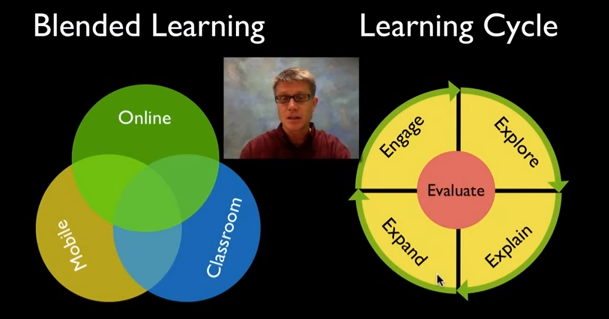
Mr. Paul Anderson is a science teacher in Bozeman, MT.  He has created hundreds of science videos that have been viewed millions of times by students and teachers around the world. His blog is titled “Bozemanscience.” Coincidentally, I subscribed to his YouTube channel a while back before even knowing he would be apart of my next blog post! Mr. Anderson is a teacher that I admire. He is always learning and sharing new things. What can I learn about teaching and learning from him? First of all, I can learn that teaching can be fun and there is nothing wrong with learning with your students. This video, "Blended learning cycle," describes that in every way. Blended learning cycle is taking mobile, online, and the classroom and blending them together. Using them all as ways to have a more productive experience. In the learning cycle students are able to explore, explain, engage, expand and evaluate all within the classroom. Paul Anderson explains the importance of questions. He says that questions are something like the hook in learning. This means to ask questions that grab the students attention. Something that stimulates them to think deeper. He uses different types of technology to engage in the blended learning cycle. I learned from Paul Anderson an amazing skill to use in my future classroom. That is, how to use the blended learning cycle.
https://blogger.googleusercontent.com/img/b/R29vZ2xl/AVvXsEhtTB3RXQfaJmxEfbBIwsC0bbzcYvmJsnzRMNrXOZPa_ARIfn-R7nAzG3nX7khrgNOpemYsT7NKCNor6v3aNZsLyra_zO4OjT7xKhpn8aQc4JCbs-9iATR_2rx_gUSFjXYJ8UAYyxY6lCVQ/s1600/Untitled.png


   “Back to the Future”- Brittnee


Mr. Brian Crosby an Elementary teacher at Agnes Risley Elementary School in Sparks Nevada, has came up with some great ways enhance his classroom. Every student in his classroom has access to a computer at their desk. He has each student create a blog, thus making them think “outside the box”. He gives a lesson and either makes them take pictures or video of what they learned and then embed it in their blog. Crosby teaches them active learning and in the video Back to the Future he shows us that learning doesn't have to be boring. We can learn from him that keeping a blog and sharing it to teachers and students around the world can help engage students and keep them wanting to learn. This video has taught me that even though it is just an elementary class doesn't make them any less important to the way we are teaching and learning. All these projects that he does in his classroom helps to empower, connect, collaborate, motivate, and include children. Something else in his video that I can learn from is when he talked about the student with Leukemia and how he connects with her every morning  by using Skype to let her be a part of the class. It has never crossed my mind of what I should do if I were in that position. He mentioned two different sites that can help him one site is ed.gov and the other is whitehouse.gov. I have learned some very valuable things from Mr. Crosby and I would use his example in my future classroom.


Mr. Mark Church is a teacher that promotes visible thinking. Visible thinking is a research- based approach to learning and something that we as future teachers should know about. One of its main goals is to deepen content learning. Getting children to think out loud and in a group is one of the ways that Mark Church shows visible thinking in this video. He wants to get children involved in the subject matter and wants them to care about what they are learning. Visible thinking is about creativity and the strive for knowledge. This is a way to encourage your students to be the best learners that they can be. Visible thinking is something that I had honestly never heard of. I think that Mark Church's book, Making Thinking Visible: How to Promote Engagement, Understanding, and Independence for All Learners, would be a very good purchase for those trying to better the overall learning and thinking atmosphere in their classroom. I cannot wait to learn more about it.

Wednesday, June 19, 2013

C4T Assignment #2


C4T #2 Mrs. G

For my C4T #2 I was assigned to view the blog of Mrs. Goerend; better known as Mrs. G. She is a fifth grade teacher at an Elementary school. Her first post titled "Struggles," explains the difficulty of having her class focus on learning rather than being so social.She writes this post during spring. The school is nearing spring break. Her class is about to move on to middle school and she explains the struggle she is having.Although her class is excited to be moving on to middle school and being on summer break, it is also important for them to continue learning! I can truly relate to what she is saying. Mrs. G is considering coming up with a strategy to help her class. The key element is to not yell at the class or sound like a broken record at the end of the day. This is the comment I left her:

"Mrs. Goerend,
This post really hits home for me. While reading it I remember going through some of the same things while in elementary school. You wouldn't believe some of the ridiculous things teachers come up with to make their class "act better," or listen to them. I remember one teacher who turned the lights off and on over and over just to attempt to make us listen to her. Yes, you are right. At the end of the day most teachers do sound like broken records and the class really won't listen then. I am so interested to know how this turned out. I'm sure you came up with something great. It may even be something I can use in my future classroom."
Amber McQueen, EDM310 at the University of South Alabama.


The interesting thing about Mrs. G's blog is that she follows up with the strategy she came up with. This is her second post. In this post she answers her own questions and has found a strategy that'll help her class focus on curriculum rather than being social. First of all she identified as a class the three main behavior areas they struggle in: on task, voice level, and caring/respect toward others. Here's the strategy she came up with: 


  • I divided the class into three groups and they each started with what a secure classroom might look like, then went up from there for exceeding and down for beginning and developing. 


http://www.lauracandler.com/strategies/images/teachingstrategies.jpg
  • Then we came back together as a class to share out and make sure the language and numbers matched up for the whole rubric. We identified the 3 key times in the day that students struggle most: math, Words Their Way, and independent reading.

4) I chose two students per day to assess the class during those times. Those two students had a quick discussion after each of those subject areas, came to an agreement on how to score the class, and reported their assessment to the class. We did this for four days and then looked at the data and set a goal.

5) I compiled the data by assigning one point to a beginning score, up to 4 points for an exceeding score. The first four days, students scored 65/144. Many were able to see that it was below 50%, and that an average of 50% would be all developing scores. Then we set a goal for the next four days. The class agreed that we should shoot for 50%, so 72/144. Different students continued to assess and report to the class each day.

6) At the end of the four days (yesterday), I compiled the rubrics again. Good news! They exceeded their goal! They got 78/144 - 54%! We set a new goal for next 5 days. Students decided on this goal and are aiming for a little above 50%. We'll see how it continues.


I really admired Mrs. G's compassion and care for her class. I knew this strategy would work just fine for her and the class. Here's my comment I left on her post:


Hello,

My name is Amber McQueen and I am an EDM310 student at the University of South Alabama. I really enjoyed your post and I found that the three main areas of struggle were right on point. This project seemed very helpful to your class. It taught them many things. I enjoy picking up skills for my future classroom. Great post.


1st Progress Report PLN

1st Progress Report
http://www.zackrock.com/blog/2011/02/21/postcard-from-the-edge-no-seriously-2/

So far, this semester in EDM310 I have learned many useful things. From using Mac book computers, writing and creating my own blog (which I am proud of), and becoming more in tuned with why I want to be a teacher. This semester Dr. Strange has given numerous useful sites to help us with our assignments. One that stands out to me is the Wolfram Alpha site. Wolfram Alpha allows you to search anything you want and it will provide you with definitions, related things, and even pictures and examples. I use this site regularly. It's a little more concentrated than the broad use of Google.  Also, I have learned to love everything that Google has to offer. Including gmail, drive, and Hangout. Hangout allows you to connect with not only classmates but everyone around the world. It's a sure way to discuss educational topics, learn more, and build relationships. We are almost complete with this class and I am continuously learning. 

Blog Post #9

Tuesday, June 18, 2013

Blog Post #7

Amber McQueen-
BAT Keyboard by Infogrip

Infogrip's BAT Keyboard is a one-handed, compact input device that replicates all the functions of a full-size keyboard, but with greater efficiency and convenience. The BAT is easy to learn and use. Letters, numbers, commands and macros are simple key combinations, "chords," that you can master in no time. Best of all the BAT's unique ergonomic design reduces hand strain and fatigue for greater comfort and productivity. The BAT is the ultimate typing solution for persons with physical or visual impairments and is proven to increase productivity when used with graphic or desktop publishing software.


What assistive technologies are available to you as a teacher? (Select a few and discuss how they may be useful to you.) -Hannah

Many children in the United States suffer from some form of communication impairment. It is my job, as a teacher, to provide them with some sort of way to better communicate. I have done the research and there are many devices that would aid in the this. My favorite one that I came across was the Nova Chat. The Nova Chat is used by people who have ALS, Autism, Down-Syndrome, and Parkinson's disease. From the outside it looks somewhat like a heavy- duty ipad. It is actually a device made specifically for children and adults with hearing or communication impairments. All you have to do is find the button that best represents what you are trying to say and push it. Nova Chat gives you the option to communicate using simple words, phrases, or even pictures. One thing that I thought was really neat is that on the Nova Chat you can use different voices to communicate. A few of the options would be a child's voice or even a British voice. The Nova Chat is also now available to communicate in Spanish. I was not completely sold on this device until I saw the video Julia Using Her ALT- Chat device. Nova Chat is a device that I would definitely want to use in my classroom.

FM Systems- Brittnee

Students with hearing problems in a quiet environment can hear really well, but putting them in an environment that is really loud changes everything. Students that are hard of hearing use many different devices, but the one that I found that could help students would be the FM Systems . Kids of all ages can use these devices, because when they enter a classroom with all sorts of different noises their hearing becomes muffled and they have a hard time making out what is being said by the teacher. FM Systems are devices that uses  radio transmission to send auditory signals. This device is wireless, portable and battery operated. While the teacher is giving a lesson or talking they will have a microphone attached to a transmitter that is hooked to their body and as they talk the student will have a receiver connected to their clothing or an input cable or by connecting it to the actual hearing aid itself. I found that students will be able to hear a speaker from either 30 ft-200 ft depending on the power of the antenna. According to the  American Speech- Language hearing association they describe they FM Systems as being like miniature radio stations operating on special frequencies. These devices can be used anywhere that has too many loud noises. Ex. movie theatre, restaurants, or even in church.   

http://techelemed.wordpress.com/2009/09/21/assitive-technology-in-the-classroom/

Friday, June 14, 2013

Project #8

My book Trailer for "Sue likes Blue" by Barbara Gregorich Directed by Amber McQueen

Thursday, June 13, 2013

Blog Post #6

What do we need to know about asking questions to be an effective teacher?

    "Three Ways to Ask Better Questions in the Classroom," by Maryellen Weimer, Phd. While reading this blog post I discovered three intriguing tactics to follow while trying to improve your question asking skills. Most teachers do not realize that the way they ask questions to their students can really confuse them. Especially if the subject at hand was already confusing.   Do you want your teaching to be in vein? Well, if not follow these three ways to improve your question asking skills.

  1. Prepare your questions. Most teachers never prepare the questions that they are going to ask their class. They usually go off of impulse. Well there is a better way to do this. By preparing your questions before hand you have plenty of time to think them out. You will realize they will make more sense also. You should want your questions to help improve your students thinking, not quiz them with hard questions about what you just taught. A sure way to tell if you are not asking the right type of questions to your class is if no one answers it! 

2. Play with questions. Questions are most powerful in that space between the question and the answer. Playing with questions means to leave it unanswered for a while, then giving your students stimulating things to think about before answering it. This will help keep them thinking. This may also give them extra time to write down ideas and possibly their response to talk it over with other students. A good way to get the best answer is to ask the question at the beginning of the period and return to it close to the end of the period. 

3. Preserve the good questions. Your best questions may be kept. A lot of times they can be revised and saved to ensure it's a quality question. Whenever a student asks a good question you should always save it. Bringing up in class good questions that students have asked previously gives them a sense of value and that their question was important. The goal is to have students possibly start asking better questions; even ones teachers can't answer. Always remember, the only bad question is the one not asked! 

Questions


Wednesday, June 12, 2013

Blog Post #5

Podcast

    I think podcasts in the classroom are very important. Podcast is basically the word iPod and broadcast in one. As described in Langwitch's blog, podcasts can be recorded by teachers and played by students to get  ahead or get a better understanding of the subject. According to Joe Dale's blog about podcasts, they can be very helpful to students outside of the classroom. Take for instance, if a student is sick they no longer have to worry about missing an assignment or lesson. They can simply log onto their teacher's website and watch the podcast. Podcast allow for differentiation and project based learning.

     According to Judy Scharf and her blog, the beauty about podcasts is that they can be about any subject and any teacher can succeed in using them. Students have become very interested  in this and enjoy learning with others. For me, I will definitely use podcast in my classroom. Only thing is I wish I was able to use podcast as a child!


Podcasts in the classroom


Project #7 My Sentence/Passion Video

My Sentence is...

My Passion is...

Sunday, June 9, 2013

C4T #1


Mr. William Chamberlain's blog (C4T) 

1. For my C4T assignment, I was assigned to read a couple of blog posts from Mr. William Chamberlain's blog. "Whispersync for Voice" is the first blog I've read by Mr. Chamberlain. In this post he introduces a new item called the Whispersync for Voice. This item is a great 21st century teacher tool. It reads books aloud to the class. Personally, I would love to use this product in my future classroom because I love being read to. He also tells us one of the main benefits of this ebook, is that it is a lot cheaper than the actual book. In my comment on this post I let Mr. Chamberlain know that I was very interested in purchasing the "Whispersync for Voice." I told him that as a future teacher I was very excited about possibly using it in my classroom.


2. In the second post I was assigned to read by Mr. Chamberlain I learned a lot of things. He chose to title this post "It Would Have Been More Fun If It Was Figuring Out a Trip for Us: Mr. C, What Is a Real World Scenario Part 2." In this post Mr. Chamberlain's math class is trying to figure out the cost of his up and coming baseball trip. He used this as a project for his class and thought it would be a great break from all of the test prep. This is the comment I left on his post:

Hi Mr. Chamberlain,
I think this blog is very interesting. If I were your student I would be very excited about this project. It teaches them problem solving as well as time and financial management. I think the guidelines you gave your students were very logical and helpful. After the test in math, I think it would be a good idea to actually take the trip! 

Mr. Chamberlain gave his class guidelines to follow. First, they would only be gone 5 days on the trip. Next, they could spend up to $75 per day on food and $50 per day on souvenirs. I felt like these guidelines were reasonable. I explained to Mr. Chamberlain that this taught his class problem solving, time and money management. This post was interesting and I'm curious to know how the ending project turned out.


Thinking cap, new ideas, and problem solving
Thinking cap

Project #3 Presentation

Blog Post #4

21st Century Tools 

 Brittnee- 

Promethean is a company that is designed to make many different tools to help students learn. They want to take learning to the next level in the 21st Century.Their goal is to bring together data, resources, tools and expertise. I chose this program, because of the major differences they have made in bringing children together to work in groups and learn at their own pace. The more the children are engaged the better they learn. Promethean uses tools like, ActivTablet which is the same thing as an iPad and they also have an ActivBoard, this is similar to a SmartBoard. On the site you can watch videos of children learning with these tools and see that they are really understanding what the teacher is talking about. These children want to be called on to go to the board, because they want to draw or play the games that can be loaded. The tool that is most fascinating and the one that I would want to use is the ActivTable, this table is a multi-user interactive table designed to promote student collaboration, engagement and student-led learning.I chose this tool, because children use this table to help each other learn and it is a great tool to use for students to become more interactive with students. If a child does not understand something while is it being taught, they can go to the ActivTable and get help from other students.

 Amber- 

Flipping the classroom is an amazing 21st century tool. The whole purpose of it is to make sure the teacher addresses each child's academic need. I believe that this tool really helps students learn and grasp the subject before it is taught. The object is to have each student watch a video of their own teacher explaining the lesson for the next day. Many 21st century teachers choose to flip their classroom because only 10% is application and the other 90% is teaching or concept. To me that is entirely ridiculous. That is another great example of burp back education. Also, there is not enough time for differentiation in the classroom today. This great tool allows students to watch, rewind, pause and post questions about the topic at hand if they are confused. Students who have mastered the subject may also work ahead. They are able to watch the video as many times as they want. Many teachers find that after they have flipped their classroom all students become engaged and challenged. This makes for an effective differentiation. Now instead of teaching 90% of the time, teachers realized they have more time to help children apply the skills they have learned. They also have more time to cater to every child's needs. I believe that “Flipping the classroom” is a very effective tool and I hope to use it.

 Hannah- 

 Prezi is a presentation and software tool. It allows you to turn boring slideshows into something more captivating for your audience. Many people use Powerpoint to express their ideas through presentation. Prezi is so much more than that. Prezi not only allows you to express your ideas but, but it also lets you share them on the cloud. One of my favorite parts about Prezi is all of the animation and decorative options that it gives you. The templates are really fun and interactive! I would use Prezi to present textbook information to the class. Textbooks can be so boring. This will definitely spice it up! I am also going to make it an option for my students to use Prezi to present information that we are learning in class. I chose this tool because it is great for capturing the student’s attention. I think that the students will enjoy Prezi and actually be excited to make a presentation using it. I found the tutorial on the Prezi website to be very helpful.This is a great tool and I think that every teacher should incorporate it in some way in their classroom.

Flipping the Classroom


Wednesday, June 5, 2013

Blog Assignment #3

Peer Editing

Peer Editing
         I believe that peer editing can be very helpful and also harmful if done the wrong way. This video, titled "Writing Peer Review Top 10 Mistakes" that Dr. Strange recommended, is a great example of how to peer edit. It was also my favorite from the variety of videos he gave us. It uses the characters Picky Patty and Mean Margaret. Picky Patty criticized every mistake in her peer's paper; even ones that weren't noticeable. This is a huge mistake. You should always remember to only find the noticeable mistakes so that you won't overwhelm your peer. Mean Margaret was mean with her editing. She did not start off with compliments or tell her peer what she liked about their paper first. Be careful to not be mean while editing you could offend your peer and discourage them  from writing.

      Both the video "What is peer editing?" and the slideshow "Peer editing with perfection tutorial" were also great examples of peer editing. They gave in depth detail of how to correctly peer edit a paper. I learned that there are a few rules to follow while peer editing. Those are: Start off with compliments and saying what you like about your peer's paper. This can relax them and make editing not so intimidating. It also makes them feel like they have done at least one thing right. Secondly, to give suggestions. Yes, they may be your friend but the concept is to help them become better writers. So be honest with them. Lastly, don't forget to give corrections! That is the whole purpose of peer editing right? Be sure to be logical and not petty. Remember only the noticeable mistakes are important.

     I also feel that  Paige Ellis has a wonderful blog and gave a great lesson on peer editing. I like the quote she gives. It is very inspiring as a future teacher. "We are part of a learning community" -Dr. Strange.


Sunday, June 2, 2013

Blog Assignment #2

Mr. Dancealot

Mr. Dancealot is a professor who apparently teaches dance. Although this is a dance class, I found it strange that there was no dance floor nor was there space to practice. Yet the students were in a regular theater style classroom. Mr. Dancealot made many mistakes while trying to teach this dance class. First, the students were trying to learn to dance from a power point slide. BIG MISTAKE! I believe that nothing physical can be learned that way. When students tried to get out of their seats to practice they were told to sit back down. How can students learn anything under these conditions? Finally, it was time to take the test and the students were forced to (physically) perform the dances they had learned from the power point slides. Of course they all failed. This was a very fun video to watch and it also gives us a perfect example of Burp-Back education. 


Bad Teaching


Harness Your Students Digital Smarts- Amber

Harness your students digital smarts is a video about technology in the classroom. Teacher Vicki Davis teaches her students to use their creativity as they use their computers. They create blogs and comment on other students blogs. They are a  very interactive class and are technology savvy. I think that is important in the classroom today. Vicki Davis is a great example of a 21st century teacher. She is open minded and allows the students to teach her as well. We both have something in common. I believe in learning together instead of standing in front of a classroom teaching and having students feel inferior to me. Vicki Davis inspires me to become a open minded teacher and more importantly have FUN in the classroom. 


Teaching in the 21st Century- Brittnee

I think that Kevin is right, things are changing and that everything is moving to all sorts of different types of media. Kevin Roberts is basically saying that one day teachers will no longer be needed. The video shows that children will be using computers more. Even though children will be used to using all kinds of different technology, they still need someone to show them how everything works. Using all kinds of different things in the classroom would be handy, but in some parts of the world children have never even seen a computer. That’s why we as teachers should have the knowledge of all the the different types of advancements so that we can keep the kids up to date as well as ourselves. We are now a filter to education rather than the only source. 


Networked Student -Hannah

     Wendy Drexler's "Networked Student," served as an eye-opener for me. Everything that children will be able to do online now, and even more so in the next few years, makes me wonder if children will even need a teacher. All learning can be done online. This is if the children find reliable sources. They can communicate with the teacher and other students using any social network.


    As of right now, I am not sure if I am prepared to be a teacher of the networked student. Up until the past few years, I have not been a networked student myself. I have also learned more about the use of the internet this year than I ever have. There is still so much more that I need to understand. Hopefully, by the time I graduate, I will be prepared to be a teacher of the networked student.
 I really enjoyed watching "A seventh Graders Personal Learning Environment." She had all of her sites organized so well. It made it so much easier for her to find everything she needed. She had her school work separated from her leisure activities. I would have to say that her PLE was more organized than mine, but it made me want to change mine for the better.